Behind every declined deposit is a player deciding whether to try again or move on. In iGaming, where acquisition is expensive and loyalty is thin, the deposits you lose at the cashier are often the ones you paid the most to win. The good news is that many of those declines are recoverable. The difference often comes down to one thing; how you route the transaction.
Relying on a single gateway or fixed payment path means every transaction is exposed to the same limitations. When that route fails, the deposit is often lost, along with the revenue and player behind it. Smart routing changes that. By dynamically selecting the best path for every transaction, it recovers approvals that fixed routing leaves on the table.
Automation follows a rule. Smart routing with orchestration wins the deposit.
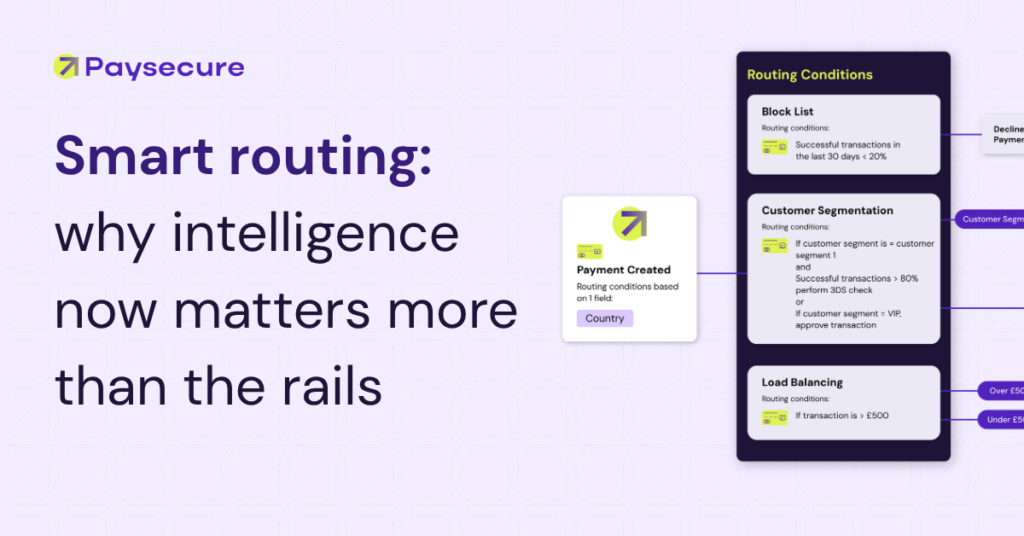
The difference between the two terms matters because they are often used interchangeably, despite delivering very different outcomes. Automation follows a fixed rule; send this card type to that provider, every time, regardless of how that provider is performing at that moment. Smart routing through orchestration takes a far more intelligent approach, evaluating real-time performance, cost and risk for every transaction before routing it to the best available path.
A fixed rule cannot know that a provider is degrading this afternoon, or that a particular issuer is approving more readily through a different acquirer. However, the intelligence engine behind orchestration can, and with smart routing in place, it acts on those insights in real time, optimising every transaction as it happens.
Here are five ways smart routing helps win those deposits back.
1. Route on real-time performance, not a fixed waterfall
Most declines are not permanent. They happen because a transaction is sent down a payment path that is underperforming at that moment. Routing based on live approval rates, cost and risk data ensures each deposit takes the path most likely to succeed right now, rather than the one that looked best when the rules were first created.
For high-volume operators, even small improvements in approval rates compound quickly. Basing routing decisions on real-time performance, rather than relying on a static waterfall, is one of the most effective ways to recover deposits and maximise revenue.
2. Build failover and retry into every route
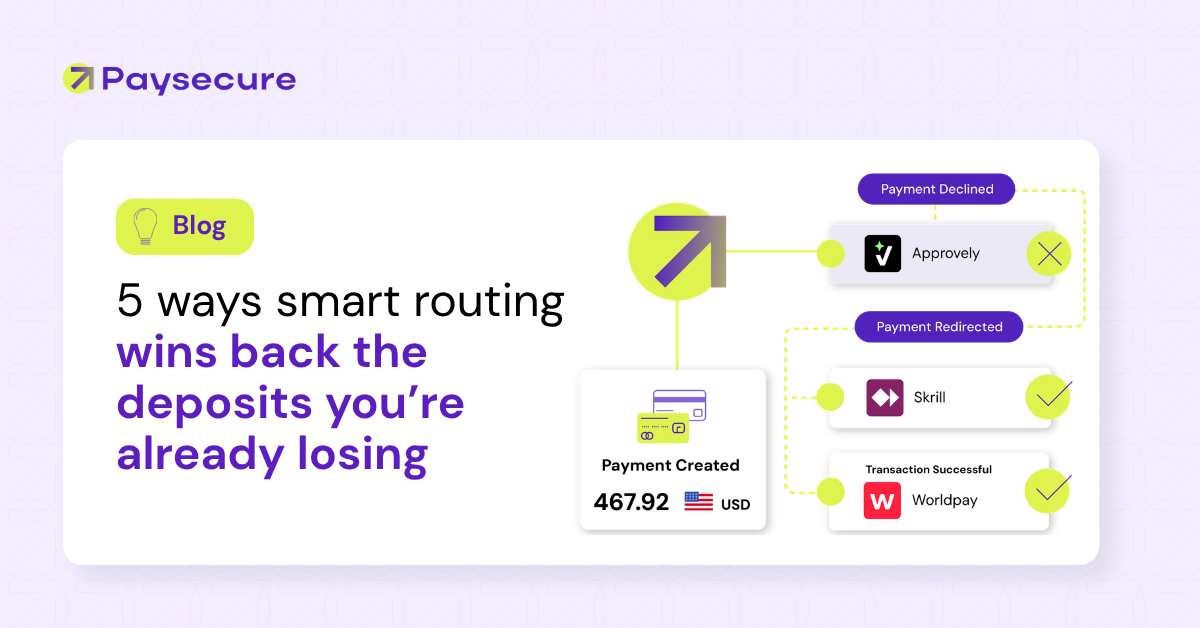
When a provider underperforms or goes offline, what happens next determines whether the deposit is recovered or lost. Without failover, the transaction ends at the cashier with a decline. With failover and retry built into the routing logic, the transaction automatically cascades to the next best path, often completing without the player noticing anything at all.
This is the difference between a provider issue becoming your player’s problem and remaining completely invisible. At Paysecure, failover and retry are built into the routing layer rather than bolted on afterwards, ensuring a single provider issue does not become a lost deposit.
3. Route to local acquirers to lift in-market approvals
Cross-border transactions are more likely to be declined and often cost more to process. When a card issued in one market is routed through an acquirer in another, unnecessary friction can reduce approval rates. Routing transactions to a local acquirer removes much of that friction, increasing the likelihood of a successful deposit.
For operators expanding into new markets, this is where smart routing becomes a growth enabler. A single integration that provides access to local acquirers across multiple markets m helps increase in-market approval rates, without the need to re-engineer your payment stack for every new territory.
4. Read the decline codes and retry with intelligence
Not all declines should be treated the same way. Soft declines, such as a temporary issuer outage or a processor timeout, are often recoverable and worth retrying, sometimes through a different provider. Hard declines, such as a closed account, should not be retried at all, as repeated attempts can damage your standing with the card networks.
Intelligent routing recognises the difference and responds accordingly, retrying recoverable transactions through the most effective route while avoiding unnecessary retries on transactions that will never succeed. The result is more recovered deposits, higher approval rates and a healthier account profile.
5. Match the route to the player, not one rule for all
Not every deposit carries the same value, so not every transaction should follow the same route. A returning high-value player and a first-time depositor have different profiles, and routing should reflect that. By taking account of player behaviour, payment method and transaction value, intelligent routing gives your most important deposits the best chance of success.
This is where routing stops being a back-office utility and becomes a strategic tool for protecting player lifetime value. The deposits that matter most are given the path most likely to succeed.
Routing is a revenue decision
Higher acceptance is not a happy accident. It is the result of thousands of routing decisions made well, on every transaction, in real time. Treating routing as a fixed rule leaves recoverable deposits and revenue on the table. Smart routing through orchestration gives you the intelligence to win them back.
If you’re wondering how many deposits your current payment setup could be costing you, it’s a conversation worth having. We’re always happy to compare notes with operators looking to improve approval rates, recover more deposits and maximise payment performance.