Many industries think they lead in adopting technology. But in the high-stakes world of digital payments, few sectors drive innovation more than iGaming.
iGaming operators work in a fragmented, regulated, and very competitive global environment. They face many daily payment challenges. They must handle high volumes of cross-border transactions, conduct fraud and compliance checks, and meet the demand for instant, easy payments. For these operators, payments are the most important moment for converting and containing a user.
This pressure has forced iGaming to create advanced payment solutions before other industries even saw the problem. The solution is payment orchestration. Now, iGaming’s lessons offer a clear path for transformation in other complex and progressive sectors, like FX trading, retail, and ecommerce.
The iGaming crucible
To see why iGaming’s solutions are strong, you must understand how severe its challenges are. The payment pain points are many and critical.
First, there’s the wide range of local payment methods. A Brazilian player uses Pix and a Southeast Asian player expects a local bank transfer or e-wallet. An operator cannot survive by only offering cards.
Second, regulations constantly change, with fragmented global rules and the constant threat of new taxes or affordability checks in key markets.
Third, speed is vital. A deposit taking three minutes instead of three seconds loses a customer.
Finally, operators must balance security and experience. They need to protect high-value VIP players while safely onboarding new users. This requires a deep, real-time understanding of data to build personalised, frictionless experiences.
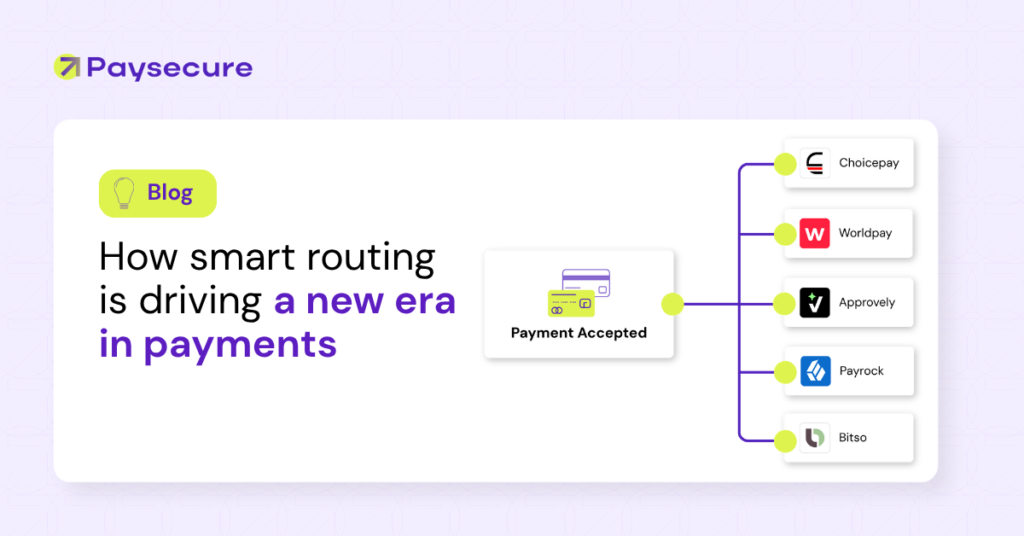
iGaming solved this with orchestration: centralised platforms that automate complex payment workflows. An orchestration layer connects hundreds of Payment Service Providers (PSPs) and local payment methods. This lets an operator smartly route transactions, reduce fraud, and customise the cashier for each user. This can improve transaction approval rates by up to 7% for Paysecure users.
This technology is proven. The good news for other industries is they don’t need to start from scratch. They just need to look at what iGaming has already built.
The FX parallel
The FX trading industry is similar to iGaming in its high-stakes nature. Both are high-volume, global, and highly regulated. However, foreign exchange trading often has a gap in its process: Know-Your-Customer (KYC) and Anti-Money-Laundering (AML) checks are often separate from the payment itself. This creates barriers users must pass before depositing, making the user journey disjointed. A trader may be approved for an account, only to face new verification hurdles when they try to fund it. Each step adds complexity and a chance for the user to quit.
iGaming unifies these processes through orchestration. An intelligent platform manages the entire funding journey, not just individual transactions. During sign-up, the platform can trigger real-time KYC/AML checks within the payment flow. By integrating verification providers with PSPs, the system ensures a user is compliant before they attempt the first deposit.
For the FX industry, this solves two payment challenges: it significantly reduces friction for legitimate customers, and it gathers all compliance and transaction data into one, auditable system. The lesson is to stop treating compliance and payments as separate silos. Treat them as two parts of a single, orchestrated event.
Lessons for retail & ecommerce
Retail and ecommerce firms seem to have simpler problems at first. But as these sectors become more global and competitive, they face the same payment challenges iGaming solved years ago. Users worldwide expect an immersive, easy, and instant payment experience. Understanding why a payment fails or what encourages a user to finish a transaction is as crucial for a retailer as it is for an iGaming operator.
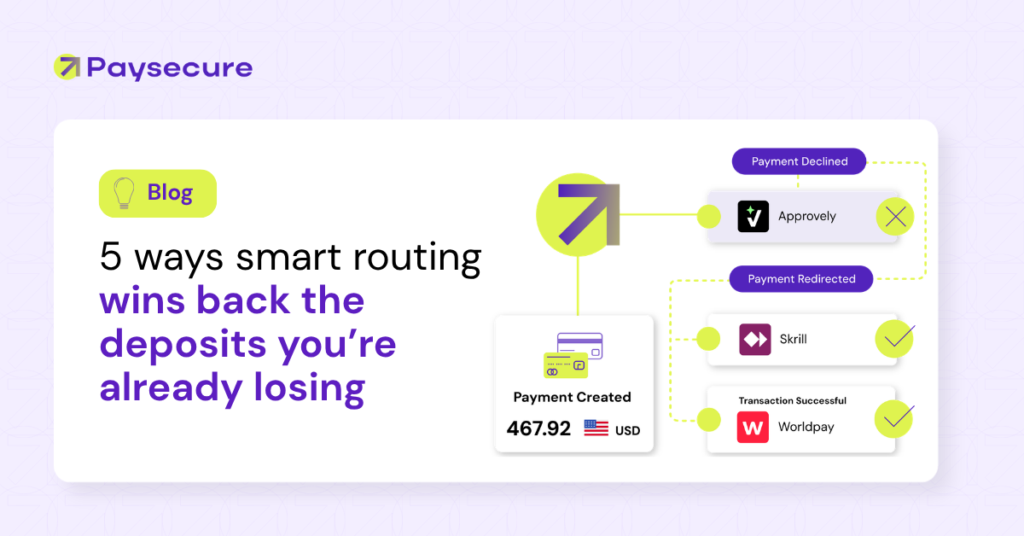
Orchestration can boost retail checkout success in three ways. First, smart routing saves sales. Most online retailers use one or two PSPs. If an acquirer network is down or a cross-border transaction is wrongly flagged, the payment fails and the customer is lost. iGaming operators can’t afford this. Their orchestration platforms use smart routing to automatically retry a legitimate, failed transaction with a different acquirer in milliseconds. This is known as redundancy, and it builds payment infrastructure resilience. For a global e-commerce brand, this one feature could save millions in lost revenue from false declines.
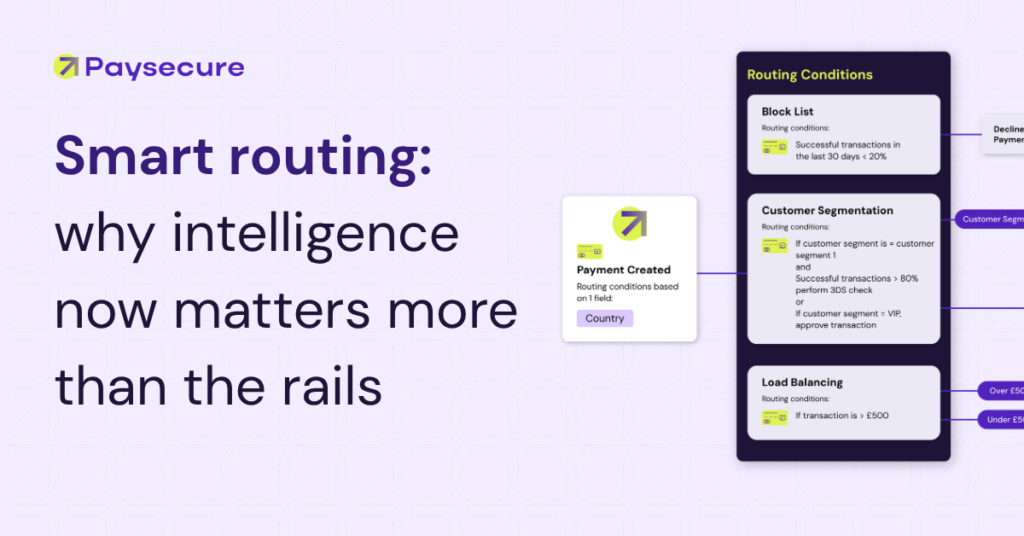
Second, true personalisation is possible. Retailers excel at personalising marketing, but the checkout is often the same for everyone. iGaming operators build highly personalised cashiers. They profile and segment players, such as new customers in Kenya, or high-value players in the US. This data helps protect VIPs and nurture new players, offering unique experiences that drive positive buying behaviour. A retailer with an orchestration platform could do the same. Imagine a checkout that instantly recognises a loyal customer and offers one-click payment, while giving a new, high-risk customer a 3DS card flow. This is data-driven personalisation at the most critical point in the buying cycle, at payment point of sale, can transform performance and build customer lifetime value.
Finally, new payment methods can be adopted instantly. iGaming operators quickly adopted alternative payments like crypto. Retailers often fear additional integration costs. An orchestration platform acts as a universal adapter. Want to test a new e-wallet in a specific market? It’s a simple backend plug-in with no need to re-engineer the entire checkout. This allows operators to enter new markets at unprecedented speed and gives them new data for further segmentation and personalisation. This agility lets retailers meet customer demand for new methods, like Apple Pay tokenisation, instantly. It also future proofs their payment infrastructure for scale.
A level playing field for all
FX trading is inherently a high-risk sector for payment providers, and faces many of the same payment challenges iGaming faces. Therefore, the lessons are transferable, as are the solutions. In retail and ecommerce, the challenge of personalisation comes to the fore. Once again, this is a challenge iGaming has faced and overcome.
At Paysecure, we have seen operators navigate and overcome these payment, retention, and fraud check challenges with true, 360-degree orchestration solutions and we know how to implement these in other high-risk sectors.
Today, this technology is available to more people. Our modern orchestration solution is making this top-tier technology accessible to all merchants, not just the market leaders. By offering scalable, modular solutions, often with no high upfront costs, we are leveling the playing field. This means mid-sized and challenger brands can now access the same powerful infrastructure, deep analytics, and custom tools as the industry’s largest players.
The iGaming sector has been the ultimate R&D lab for payment technology. The solutions it created from necessity are now available to all. The only question is which sectors will be smart enough to adopt them. Soon, these solutions will likely become the standard for any industry that values its customers and its conversions.