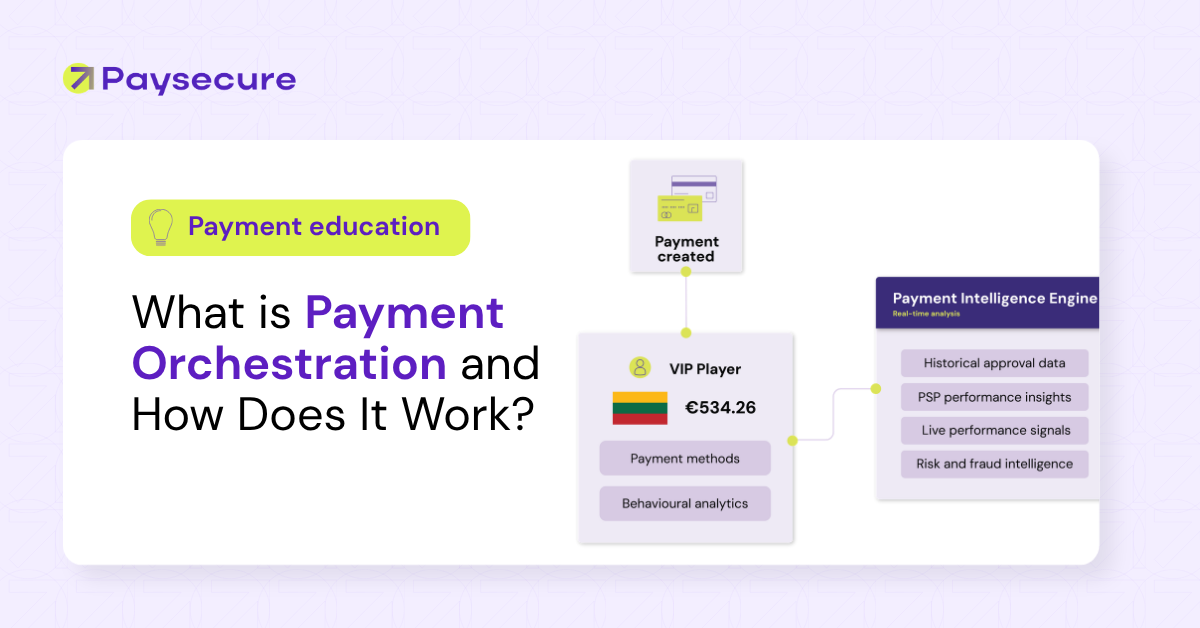
Payments have quietly become one of the most complex parts of running a digital business. Behind a single checkout sit gateways, acquirers, payment service providers, fraud tools and a growing list of payment methods, all of which need to work together. Payment orchestration is how you bring order to that complexity: a single technology later that sits between your checkout and those providers and coordinates them through one integration, so you can route, retry, optimise and report on every transaction from one place. It does not replace your existing providers. It conducts them.
If you have ever added a second acquirer to enter a new market, watched acceptance rates slip with no obvious cause, or lost a scale to an outage you could not control, you have already met the problem orchestration solves. This guide explains what payment orchestration is, how it works step by step, what it can and cannot do for you, and how to tell whether your business needs it yet.
What is payment orchestration?
Payment orchestration, sometimes called a payment orchestration platform or an orchestration layer, is the control layer for your payments. It sits above your payment stack and brings every provider, method and tool together behind one integration and one set of rules. Think of it less as another pipe in the system and more as the conductor deciding which instrument plays, and when.
The distinction matters because the alternative is fragmentation. Most growing businesses end up with several providers to reach different markets, accept different methods and protect themselves against downtime. Managed separately, that creates complexity, blind spots and engineering overhead. Orchestration replaces those point-to-point connections with a single, intelligent layer you control.
How does payment orchestration work?
The capabilities inside an orchestration layer
Orchestration is a set of capabilities working together rather than a single feature. The ones that do the heavy lifting are:
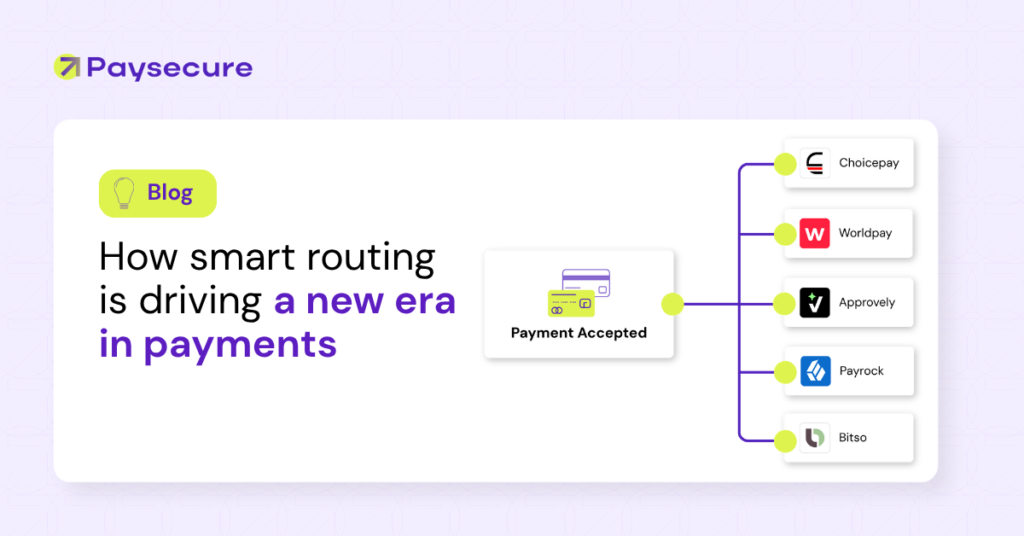
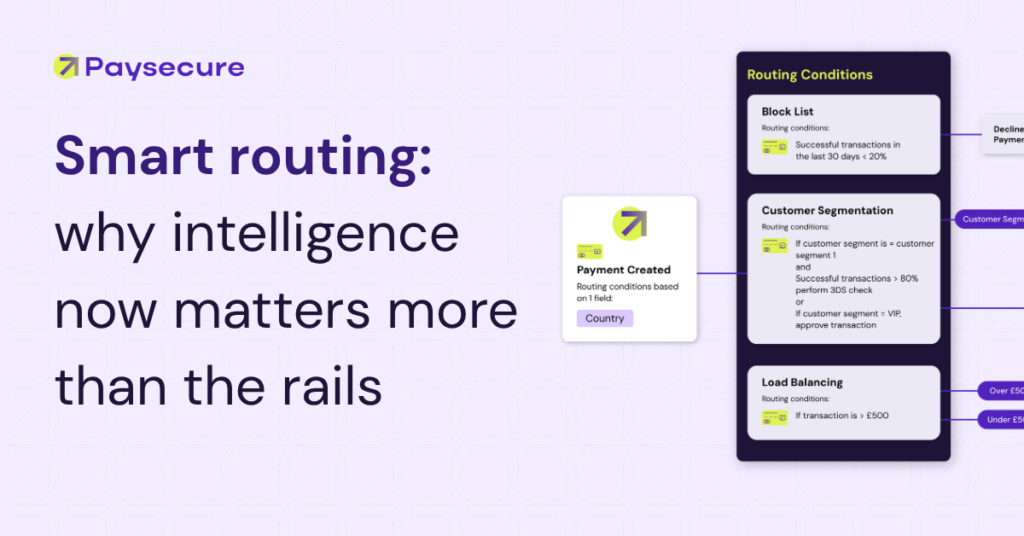
• Intelligent routing: routing is optimised to your business goals, weighing geography, currency, payment method, historic PSP performance, behavioural analytics and more, so every transaction takes the path most likely to succeed for that customer, in that moment.
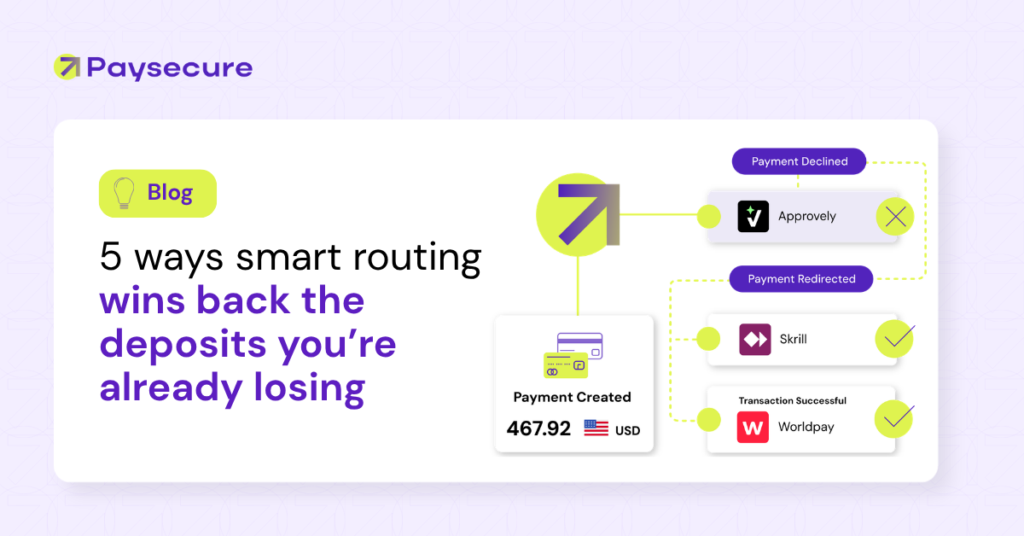
• Cascading and failover: automatically retrying a recoverable decline or outage through another provider to protect the sale.
• Provider-agnostic tokenisation: storing payment credentials centrally so you are not locked to one processor and your PCI scope is reduced.
• Centralised fraud and compliance: applying screening and rules consistently across every provider and market.
• Unified reporting and analytics: a single dashboard that turns payment data into clarity, with granular insight into every individual transaction and the headline trends surfaced so they are easy to digest at a glance. One consolidated source of truth, not several dashboards reconciled by hand.
Orchestrator, gateway or PSP: what is the difference?
The benefits of payment orchestration
Done well, orchestration moves payments from a back-office cost to a source of growth. The benefits that matter most to a scaling business are:
• Higher acceptance: routing each payment to the strongest path lifts approval rates. Merchants using Paysecure typically see acceptance rise by up to 7 per cent.
• Resilience and redundancy: with more than one provider in place and automatic failover, a single outage no longer stops your payments. Operational resilience is revenue resilience.
• Lower cost and less complexity: smart routing and a single integration reduce both processing costs and the engineering effort of managing providers one by one.
• Agility and faster expansion: one integration connects you to new markets, acquirers and local payment methods, with the freedom to adapt in real time, adding a provider, reshaping a route or responding to a new regulation, without re-engineering your stack. Launching somewhere new takes weeks, not months.
• Intelligence that compounds: every transaction feeds data back into the platform, so performance is continually refined rather than set once. The more you process, the sharper the routing and the better the decisions.
Beyond routing: intelligence and the rise of AI
The biggest shift in orchestration is that it has moved well beyond automation. Early platforms automated routing against fixed rules. Today the value is in the intelligence, vast behavioural insight and live data, with AI making routing and risk decisions transaction by transaction.
That means reading the signals around each payment in real time, the customer, the method, the market, the provider’s current performance, and acting on them as they happen. It means distinguishing a trusted returning customer from a genuine risk and adjusting the experience accordingly, rather than applying the same friction to everyone. This is the move the industry describes as Payments 3.0, a shift from routing to intelligence, where payments data becomes a competitive advantage rather than more noise.
It is also why independence matters. An orchestration layer that quietly favours certain providers cannot make a truly neutral routing decision. A platform built to optimise for you, not for itself, is what turns all that intelligence into better outcomes.
Do you need payment orchestration?
Not every business needs orchestration on day one, and it is worth being straight about that. If you sell in a single market, take payments through one provider and your volumes are steady, a single gateway can serve you well for now.
The case strengthens quickly as complexity grows. The signals to watch for are running, or planning to run, more than one provider; expanding across borders; acceptance rates plateauing with no clear fix; or reaching the point where downtime is too expensive to risk. The direction of travel is hard to ignore: as payments fragment, regulation evolves and new methods go live, most growing businesses reach the stage where coordinating providers stops being optional and starts being the difference between scaling smoothly and stalling.
Putting intelligence at the centre of payments
Payment orchestration is no longer about automating routing. It is about putting intelligence at the centre of every transaction, so each payment is informed by data and optimised in real time. The businesses that treat payments as a source of insight, rather than a cost to be managed, will be the ones that scale with confidence.
That is what Paysecure was built for. Our orchestration platform is independent by design, so routing is optimised around your goals rather than ours. It is intelligence-led, turning every transaction into insight you can see and act on, and built to protect revenue and scale as you grow. Born from the industry and built for it, we help businesses move faster, work smarter and unlock the full potential of their payments. If you are weighing up whether orchestration is your right next step, we would welcome the conversation.