The payments ecosystem your merchants operate in has evolved. A decade ago, choosing a payment provider was largely a one-and-done decision. Today, your merchants navigate a fragmented landscape of acquirers, PSPs, alternative payment methods, real-time rails, local schemes, fraud tools and AI-led decisioning. They expect their payment stack to flex with consumer demand rather than lock them into a single supplier. Vast capability has become the default expectation, and optionality is now part of the buying criteria. The conversation has shifted from ‘who is my payment provider’ to ‘what does my payment platform enable me to do?’.
That shift has consequences for providers themselves. The decision facing PSPs, acquirers and platforms over the next few years is not whether payment orchestration matters. Your merchants have already made that call. The real question is whether the orchestration layer they use is yours to own, or someone else’s to define.
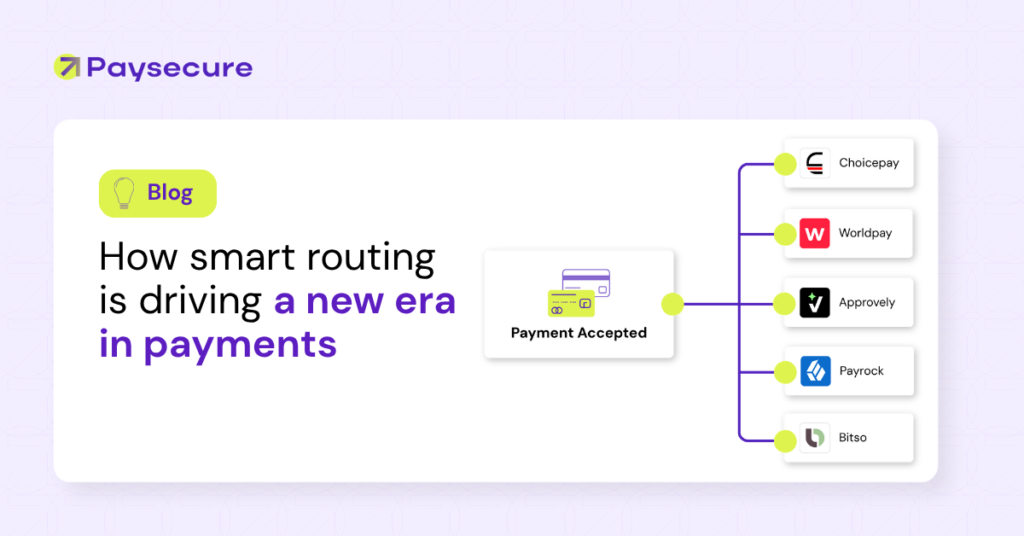
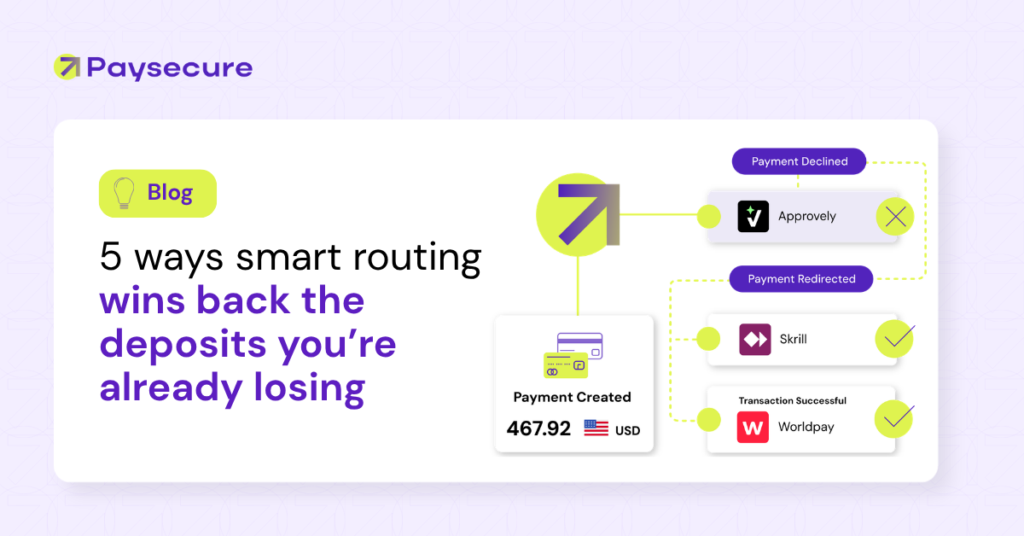
Around 97% of enterprise merchants with annual revenues of $500 million or more now work with multiple acquirers, according to research from ACI Worldwide and Payments Dive, according to a study by ACI Worldwide. The same study notes that most of those arrangements were not the result of a deliberate strategy. Merchants became multi-acquired because resilience, cost, authorisation lift and local payment method coverage demanded it. As a result, a multi-acquirer strategy is now the default, and orchestration is the layer that decides which provider to use, when to use them, and what to do when one of them falters.
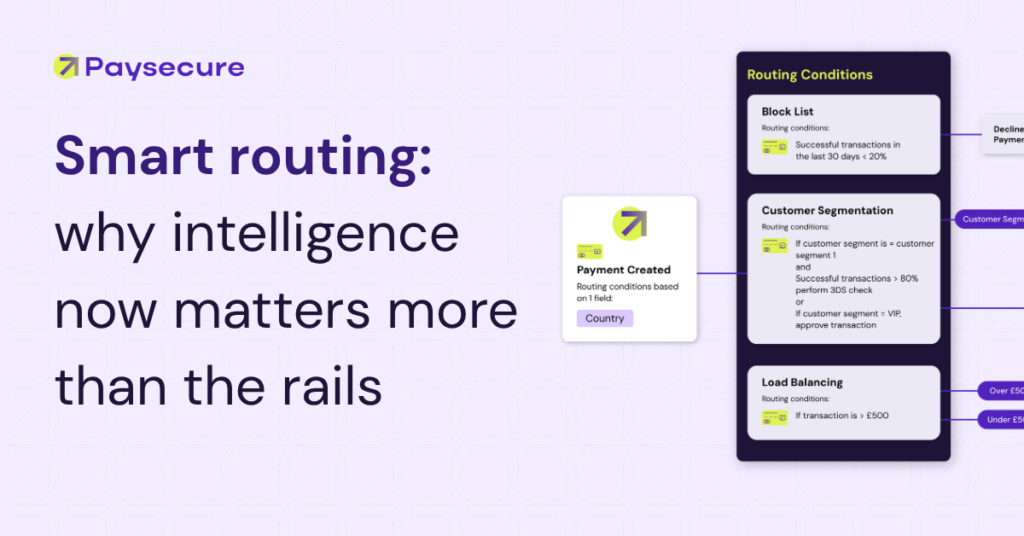
Multi-acquiring on its own is a list of relationships. Orchestration is the intelligence that turns that list into performance. The two are often paired in conversation, but they are not the same thing. Providers offering only the connections, or only the automation layer above them, are missing the part merchants now value most, the decision making that maximises every transaction in real time. Automation without orchestration leaves commercial value on the table. Payments have moved from a list of supplier relationships to a layer of decisioning, and the providers running multi-acquirer networks need infrastructure that can keep up.
What this means for providers
For large PSPs, banks and platforms, the orchestration layer is no longer optional infrastructure. It is the layer your merchants are using to evaluate every relationship in their stack. It is also the layer that decides where the next deposit, the next checkout and the next transaction goes. If you do not offer it, someone else will, and that someone else could influence how much of your merchant volume you retain.
This is where the build, buy or borrow question comes in. Building orchestration in-house is a 12 to 24 month commitment with a multi-million-pound capital outlay, ongoing maintenance that can add more than 20% of the initial investment annually, and a roadmap that can quickly age against fast-moving regulation, scheme mandates and new payment methods. Borrowing through white label is the alternate path, and the only one that lets you, as a provider, own the merchant relationship, the brand, the pricing and the data, while adding capability in weeks rather than years. At Paysecure, we typically take a new white-label partner live in around two weeks.
Build, buy or borrow: the provider’s commercial reality
The trade-offs across these paths are well documented at a technical level. What gets less attention is what each option means for the provider’s commercial model.
When you build, your orchestration roadmap becomes your build queue. Every new payment method, every routing rule and every regulatory change becomes engineering work behind the next sprint. Your speed to market is constrained by your engineering capabilities, and the merchant-facing benefit remains theoretical until it goes live. For all but the very largest providers, the financial impact and delays can be difficult to justify.
When your merchants select a SaaS orchestrator, they sign directly with that orchestrator. The orchestrator owns the relationship, the data and increasingly the brand the merchant remembers when they describe their payments experience. The orchestrator becomes an intermediary between you and the merchant.
When you borrow through white label, the merchant signs with you. The orchestrator remains invisible. The brand is yours, the contract is yours, the data is yours and the pricing is yours. The capability is borrowed, but the relationship is not. You add the value-added services your merchants increasingly want; smart routing, real-time analytics, tokenisation, local payment method breadth, AI-led decisioning, and you monetise them on your own commercial terms.
White label does not just add capability, it opens up new revenue lines. Tokenisation can be priced. Reporting can be tiered. Smart routing can be packaged as a premium service. Your commercial model expands while your legacy stack stops being something to defend and starts becoming something to modernise around. The existing portfolio is strengthened rather than replaced. The next merchant, the next region, the next payment method can be added on the same commercial terms, customised to your proposition and your merchants’ needs.
Attraction and retention in a fast-moving ecosystem
Winning new merchants is no longer the only growth challenge for providers. The harder challenge is retaining them in an ecosystem that moves faster than the contracts within it. Consumer expectations shift quarter on quarter. Regulation introduces new requirements without warning. Local payment methods rise and fall in market share. Merchants increasingly evaluate providers on whether the stack they offer can flex at that pace, not just on price. A merchant who feels their provider cannot keep up will quietly start evaluating alternatives.
Orchestration is how you stay on the right side of that evaluation. When your merchants get smart routing, tokenisation, real-time analytics, local payment methods and a dynamic checkout under your brand, the relationship deepens. They stop comparing you with t newer providers because the capabilities those providers offer are now yours too. Lifetime value compounds and new revenue streams open from the services you can now monetise. The conversation with your merchants can grow alongside your capabilities.
White-label orchestration also gives you something a SaaS orchestrator cannot, the ability to put your name on every part of that conversation. Sovereignty in white-label orchestration means you keep the merchant contract, the brand, the pricing power and the data.
At Paysecure we have built the platform to be the engine behind providers, not a competitor to them. Fully independent, modular, and branded as the provider’s own, the platform is designed to serve the partnership rather than the orchestrator. When a Paysecure white-label partner routes a transaction, the decision is made using real-time data, your merchant’s routing preferences and the transaction goals you set around acceptance, cost, fraud and resilience. That structural independence is what lets you build lifetime value with your customers while enhancing your payment solutions to meet new and growing merchant needs.
How orchestration boosts your market position
Adding orchestration to your platform does more than upgrade your feature set. It repositions you in your merchants’ minds, and in the wider market, from supplier to platform. Suppliers compete on rate cards, platforms compete on what they enable. Once your merchants associate your brand with smart routing, broad connectivity, intelligent decisioning and the ability to keep adding capability as they grow, the procurement conversation changes.
That position has compounding effects on growth. A single Paysecure integration connects you to a marketplace of over 500 PSPs, acquirers and payment methods, more than 200 alternative payment methods, and over 150 currencies for real-time conversion. New regions can be opened in weeks rather than quarters. New verticals can be tested without re-engineering your stack. Your sales team leads with a broader value proposition and your partnership team has new commercial levers to negotiate against. The orchestration platform becomes a growth multiplier, not just a payments capability.
How Paysecure supports you and your merchants
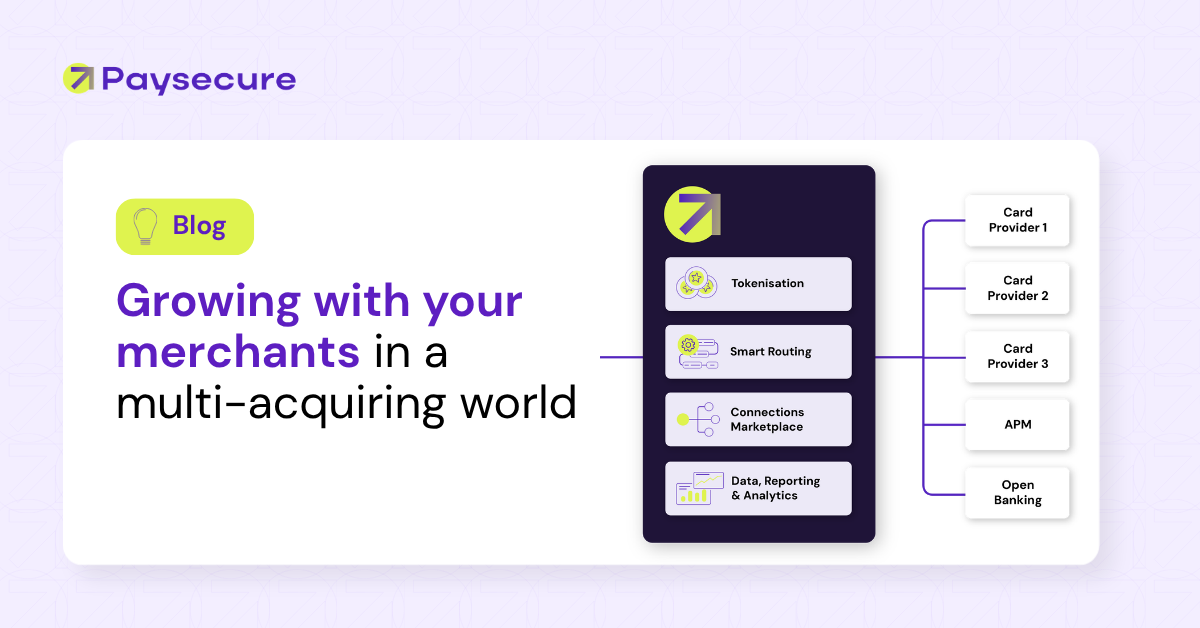
Paysecure’s white-label orchestration platform is modular by design. You take the capabilities your merchants need today and switch on others as your proposition evolves. The core spans AI-led smart routing with cascading and failover for resilience, a connections marketplace built around one of the largest ecosystems of PSPs, acquirers and alternative payment methods, centralised tokenisation that reduces PCI scope while keeping tokens portable, a dynamic cashier you can configure and brand without engineering work, and a reporting and analytics layer that gives your merchants and your own teams a real-time, 360-degree view of every transaction. Settlement infrastructure runs across the platform, which speeds settlement and simplifies reconciliation for the partner’s finance team. All of this sits within a multi-tenant environment with comprehensive management tools, configurable roles and branded onboarding, so the partner’s brand carries through end to end.
Underneath sits the infrastructure your merchants rely on without seeing: multi-region resilient architecture, sub-second decisioning, in-flow KYC and AML, and PCI DSS Level 1, ISO 27001, GDPR and ICO accreditations. New white-label partners typically go live in around two weeks, with a dedicated team supporting integration and the post-launch performance optimisation that follows. The result is a platform you can put your brand on with confidence and grow into over time.
What this looks like in practice
A mid-tier European PSP we work with serves around 250 merchants across regulated verticals, having grown out of an initial focus on SME card acquiring. Processing growth had flattened. The largest merchants in their book were quietly asking for routing intelligence, tokenisation portability and the kind of analytics they were seeing from the larger acquirers they had started evaluating alongside the PSP. The PSP’s options were to build, recommend a SaaS orchestrator or bring orchestration into its own platform under its own brand.
They chose to white-label. Their merchant-facing brand stayed the same, and the integration was live in just over two weeks. The first capabilities they switched on were smart routing and tokenisation, the two that addressed the most immediate merchant requests. Settlement reporting and real-time analytics followed once the data flows were established. Twelve months in, the merchants who had been evaluating other providers were still with them. Several had increased their share of wallet, and the PSP had added a tokenisation service line to its commercial proposition that had not existed before. Lifetime value for its top percentile of merchants improved alongside it.
The pattern is repeatable for any provider in a similar position. The largest merchants in your book are already evaluating orchestration. The question is whether they evaluate your offering, or someone else’s.
The cost of waiting
The window in which providers can lead this layer for their merchants is not open indefinitely. A recent PaymentGenes workshop with enterprise merchant leaders, summarised by Consultancy.eu in March 2026, found that 78% of merchants are actively considering switching their PSP or at least keeping the option open, while 60% plan to undertake a renegotiation or RFP between 2026 and 2028. The same research found that the “big switch” is being replaced by orchestration and multi-acquiring, as merchants build flexibility without taking on migration risk. Most will not rip and replace. Most will layer optionality in instead. And the provider that becomes the layer those merchants build on is the provider that retains the relationship.
Building orchestration in-house was a defensible answer for the largest acquirers a few years ago. In 2026, with PSD3 and PSR provisionally agreed in late 2025, card margins compressing and account-to-account share growing, the build calendar has stretched as merchant expectations have accelerated. White label is how providers close that gap with infrastructure that keeps up.
For the providers ready to take this step, there is one more reason to act now. Orchestration done well does not just defend a book. It strengthens it. The same platform that holds your existing portfolio together is the platform that lets you customise the offer for the next merchant, in the next region, with the next payment method, on your commercial terms. Modernising legacy infrastructure becomes a continuous capability rather than a multi-year project. Client stickiness, lifetime value and new revenue lines come together rather than competing for budget.
The choice was made for you the moment your merchants went multi-acquired. The remaining question is which side of the orchestration layer you want to be on.
Things to look out for when exploring white-label payment orchestration
White label is the right answer for most providers, but it is important to source the right partner for your business and your merchants’ needs.
1. Roadmap influence: Your white-label partner’s roadmap becomes part of yours. Confirm how product priorities are set, what influence you have, and what happens when your merchants need something that is not on the schedule.
2. Brand and customer experience: Your brand sits on the merchant-facing surface. Confirm the partner’s design system, error states, support flows and downtime messaging never leak through.
3. Data residency and regulation: White-label deployments can be single-tenant with data held in the licensee’s tenancy and region. Confirm data residency, tokenisation ownership and reporting visibility address the requirements of your regulators and your merchants.
Want to talk it through?
Paysecure’s white-label orchestration platform is live with large PSPs, banks and platforms across the UK, Europe and beyond. If you are weighing the build, buy or borrow question for your own merchants, get in touch with the team.