If you run an online business, there are two terms that are commonly used which can be quite confusing: payment gateway and payment orchestrator. In short, a payment gateway connects your checkout to a single route to get a payment processed, while a payment orchestrator sits above many gateways, acquirers and providers and chooses the best route for every transaction. One moves a payment. The other manages performance across your whole payment stack.
So which do you need? For a small business selling in one market, a gateway alone may be enough. But as payments grow more complex and businesses start to scale, orchestration is fast becoming the model the industry is built around. This guide explains what each one does, how they differ, and how to decide which fits your business today.
What is a payment gateway?
A payment gateway is the technology that captures your customer’s payment details at the checkout and passes them securely to a processor or acquirer for authorisation. It is the connection between your online checkout and a single payment route. Gateways are well understood, quick to set up and perfectly capable for businesses with straightforward needs, such as one market, one or two payment methods and predictable volumes.
What a gateway does not do is manage choice. It follows a fixed path, so if that path is slow, expensive or unavailable, there is often no plan B. As soon as you add a second provider or a new market, you are back to managing each connection yourself.
How does a payment gateway work?
At its most basic, a payment gateway provides the technical connection between your website or app and your acquirer or payment service provider (PSP). It securely collects and transmits payment data between the two, in line with standards such as PCI DSS.
A typical transaction then runs like this:
- The customer confirms their purchase and selects pay.
- A payment page is presented, and the available methods are shown, such as cards, wallets and bank transfers.
- The customer chooses a method, enters their details and submits.
- The gateway sends the payment information to the relevant processor, the card acquirer or PSP, for authorisation.
- The issuer or payment-method provider approves or declines, and the response returns through the gateway. If approved, the order proceeds; if declined, the customer is asked to try another card or method.
- To receive the money, the merchant captures or settles the authorised transactions, immediately for digital goods or later on shipment. The gateway consolidates these and submits a settlement file to the acquirer or PSP, which pays the funds into the merchant’s settlement account.
This is why a gateway is best understood as the foundation of a payment stack. The payment methods are presented the same way every time, the route to the acquirer is fixed, and any alternative routing, such as failing over to a backup provider, is something you manage directly.
What is a payment orchestrator?
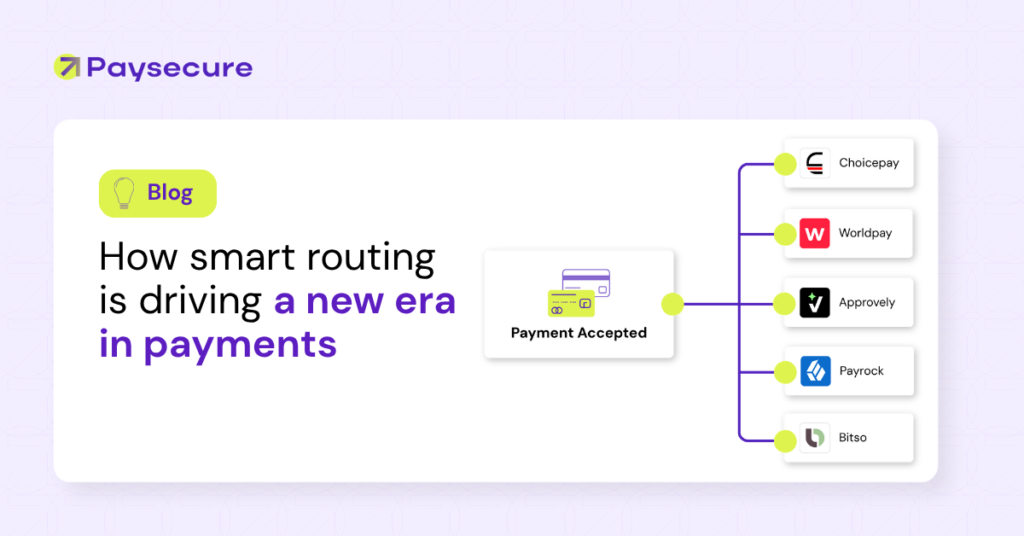
A payment orchestrator is the control layer that sits above your gateways, acquirers, payment service providers, fraud tools and payment methods, and coordinates them through a single integration. Instead of following one fixed route, it decides the best route for each transaction in real time, retries intelligently when something fails, and gives you one unified view of your entire payments stack. It is not a replacement for your providers; it brings them together and gets more from them.
For a growing business, that shift, from a single fixed route to an intelligent, managed stack, is where orchestration wins. It is also where the market is heading. Merchants increasingly want everything unified in one place, including routing, resilience and insights that a single gateway often cannot provide on its own. It is not just about consolidation, but about a centralised view to empower new growth, new connections and better decisions for performance.
How does payment orchestration work?
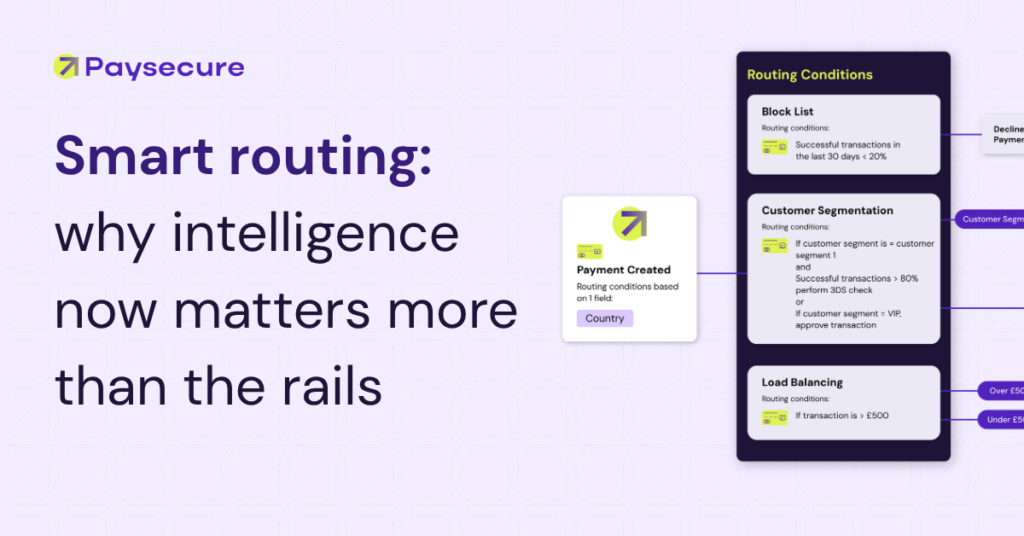
An orchestrator sits on the same foundations as a gateway, but adds a decision layer on top. At its core is a rules engine that makes real-time decisions against a wide range of attributes, rather than following one fixed path.
A transaction runs like this:
- The customer selects pay, and your platform makes a single API call to the orchestration layer.
- Presentment rules decide which payment methods to show this customer, for example whether to offer instalments or split payments, based on market, device and your own rules.
- The customer chooses a method and enters their details.
- Business rules decide which services to apply, for instance whether to invoke 3D Secure or send for fraud review, and what to do with the result.
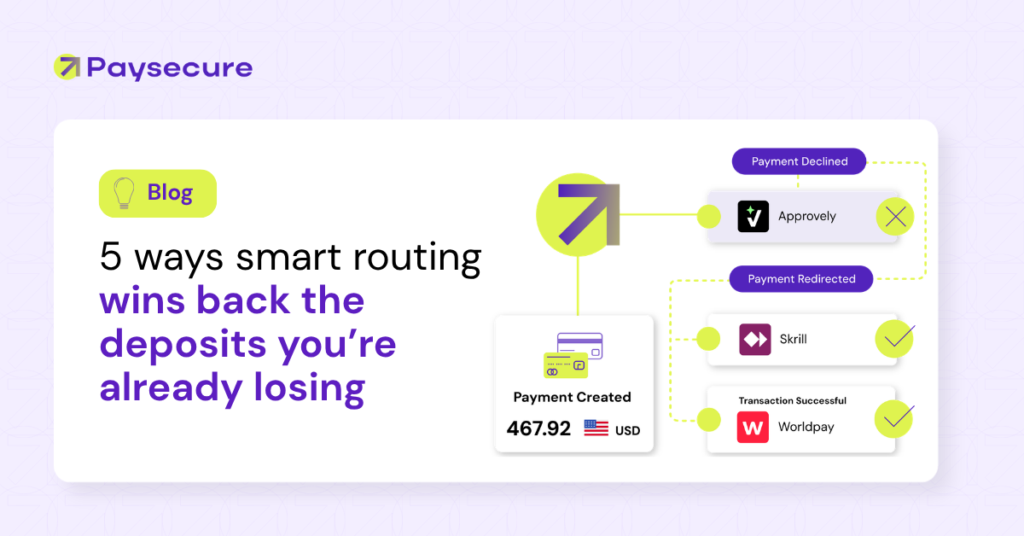
- The routing engine selects the best route by cost, approval rate, availability and more. If the primary route is down, the transaction goes to a secondary provider; if it soft-declines, it can retry with another acquirer.
- Authorised transactions are captured, and funds settle into your accounts.
The difference is choice and intelligence. The orchestrator maintains a network of acquirers, PSPs, fraud and 3D Secure providers, so you choose the best for each job, and the rules engine optimises every transaction automatically rather than leaving it to manual configuration.
Payment gateway vs payment orchestrator: the key differences
A feature-by-feature comparison of both solutions.
| Feature | Payment gateway | Payment orchestrator |
| Integration | One connection to one provider. | One integration to many providers. |
| Providers | A single gateway or PSP. | 500+ PSPs and acquirers through one layer. |
| Routing | Fixed, single route. | Intelligent routing, optimised for every transaction. |
| Resilience | No automatic failover. | Cascading and failover to reroute failed payments. |
| Reporting | Siloed, per provider. | Unified dashboard with high-level data and analytics. |
| Scalability | Manual integration per market. | Add new markets and payment methods without re-building. |
| Cost | Varies by provider. | Routing to reduce cost; Paysecure has no platform fees. |
| Fraud and compliance | Managed per provider. | Centralised across the whole stack. |
| Best suited to | Single market, simple needs. | Scaling, multi-market, high-volume businesses. |
When a gateway is enough, and when orchestration makes sense
If you sell in a single market, take payments through one provider and your volumes are steady, then a payment gateway can be the right starting point.
As for orchestration, it grows quickly with complexity. The signals are familiar, you are adding providers to reach new markets, acceptance rates are plateauing, cross-border payments are getting harder, and downtime is becoming too costly to risk. Payment failures are expensive across any sector, and industry research suggests 62% of customers who experience a payment failure, do not return.
This is felt most in high-volume, high-stakes markets. In iGaming for example, operators juggle multiple providers, strict regulations across jurisdictions, frequent payouts and sharp peaks around major events, and this is exactly what orchestration is built for. The same logic applies to any business scaling across markets and payment methods, from travel to subscriptions to marketplaces.
The direction is clear. Businesses are moving from a gateway only, to a hybrid of a gateway with some orchestration, to a full orchestration platform. The appeal is everything unified in one place through one integration, delivering full visibility, AI-driven routing and reporting across the whole stack.
Why merchants are moving to orchestration
Orchestration moves payments from a back-office cost to a driver of growth. Here are some of the key benefits:
- Higher acceptance rates and recovered revenue: intelligent routing sends each payment down the path most likely to succeed. If a primary processor fails, transactions are automatically rerouted to secondary providers, reducing downtime and recovering up to 10% of payments that might otherwise be lost.
- Resilience and redundancy: with multiple providers all in one place and automatic failover, a single outage no longer stops your payments. Operational resilience is revenue resilience.
- Lower cost and less complexity: routing to the most efficient provider helps reduce processing costs, and a single integration to 500+ PSPs and acquirers removes the overhead of managing each one separately.
- Intelligence and insight: AI-driven routing and deep reporting and analytics turn every transaction into data you can act on, from headline performance to granular, transaction-level detail.
- Global expansion and retention: one integration opens new markets, local payment methods and acquirers. A smoother, more reliable checkout helps protect customer retention.
It is also why build-versus-buy is at the top of every scaling business’s agenda. Building orchestration in-house is costly and hard to keep current, so more businesses are choosing to buy it and focus on their core operation. You can read more in our build vs buy guide, and also see how Paysecure has reduced costs for businesses in our latest case study through smart routing and orchestration.
Putting intelligence at the centre of payments
Gateway or orchestrator is, in the end, a question of where your business is heading. A gateway will move your payments. Orchestration manages their performance, and increasingly that is what growth depends on.
Paysecure is an independent, intelligence-led orchestration platform. Independent by design, so routing is optimised around your goals; connected to 500+ PSPs and acquirers through a single integration; with no platform fees and the analytics to turn every transaction into insight. Born from the industry and built for it, we help businesses move faster, work smarter and unlock the full potential of their payments. If you are weighing up gateway versus orchestration, we would welcome the conversation.
For common questions on gateways and orchestration, see our FAQs page.